The Advantages of Using Solar DC Cables Over Bare Copper Wires
As the global push for renewable energy solutions intensifies, solar power has emerged as one of the most reliable and scalable sources of clean energy. In designing efficient solar systems, one crucial aspect that often goes unnoticed is the selection of the right type of wiring. Traditionally, bare copper wire has been used in various electrical applications, including solar installations. However, the use of solar DC cables has proven to be a far more effective and safer option for modern solar energy systems. Below, we explore why solar DC cables are better suited than bare copper wires for solar installations.
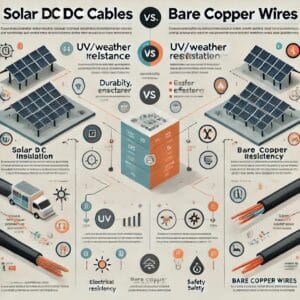
1. Enhanced Durability and Longevity
Solar DC cables are specifically designed for outdoor use in solar photovoltaic (PV) systems. They are insulated with materials such as cross-linked polyethylene (XLPE) or specialized PVC compound which is heat resistant, which protect the cables from extreme environmental conditions like heat, cold, UV radiation, and moisture. This enhanced durability is crucial for solar installations, which are often exposed to the elements over long periods.
In contrast, bare copper wire lacks this protective insulation, making it more susceptible to corrosion, oxidation, and mechanical wear. Over time, the integrity of bare copper wire can degrade, leading to potential safety hazards and the need for costly replacements.
2. Resistance to UV and Weather Exposure
Solar PV systems are generally installed in outdoor environments where exposure to ultraviolet (UV) radiation, moisture, and temperature fluctuations is common. Solar DC cables are UV-stabilized and weather-resistant, ensuring that the cables maintain their efficiency and structural integrity over years of exposure.
Bare copper wire, even if plated or treated, is far more vulnerable to the effects of the elements. Over time, exposure to UV rays and environmental conditions can degrade the wire, leading to increased resistance, loss of efficiency, and potential failure in conducting electricity.
3. Electrical Efficiency and Safety
Solar DC cables are engineered to handle the specific demands of direct current (DC) electricity, which is the type of electricity generated by solar panels. These cables have low resistance to DC flow, ensuring that the power loss during transmission is minimal. Moreover, they are manufactured to handle the high voltages commonly associated with solar installations safely.
Bare copper wire, while an excellent conductor, is not specifically designed for the demands of DC transmission in solar systems. Without proper insulation, bare copper wire can pose a significant risk of short circuits, electrical fires, or energy loss due to high resistance.
4. Improved Insulation and Protection
Solar DC cables are double-insulated, providing a layer of protection against electrical shocks, short circuits, and mechanical damage. This is particularly important in solar installations, where the cable runs are often long and routed through various outdoor environments.
Bare copper wire, as the name suggests, has no insulation and relies entirely on the quality of the surrounding materials (such as conduit or sheathing) to provide protection. This makes it far more vulnerable to accidental contact, damage, or degradation over time, especially in rugged outdoor conditions.
5. Compliance with International Standards
Solar DC cables are designed to comply with international safety and performance standards for photovoltaic systems, such as the IEC 62930 and EN 50618 standards. These standards ensure that the cables meet stringent requirements for fire resistance, flexibility, and electrical performance.
Bare copper wires, while meeting general electrical standards, do not offer the same level of assurance when it comes to solar-specific installations. This lack of compliance can lead to issues in safety, performance, and legal certification of solar systems.
6. Ease of Installation and Maintenance
Solar DC cables are often designed to be flexible, lightweight, and easy to install, even in challenging environments. They can be routed over long distances without the need for additional protective conduit or sheathing, which simplifies the installation process and reduces costs.
Bare copper wires, on the other hand, require extensive protection through conduit or shielding materials, which can add to the installation complexity and cost. Additionally, bare copper wire installations typically require more frequent maintenance due to their vulnerability to environmental damage.
7. Cost-Effectiveness in the Long Term
Although solar DC cables may initially be more expensive than bare copper wires, their durability, efficiency, and low maintenance requirements make them more cost-effective over the life of the solar system. The initial investment in higher-quality, solar-specific cables can be easily offset by reduced maintenance costs, longer system lifespan, and fewer replacements.
Bare copper wire may seem like a cost-effective option at first, but its susceptibility to corrosion, environmental damage, and higher maintenance costs can quickly make it a more expensive choice in the long run.
Conclusion
While bare copper wire has been a staple in electrical installations for decades, solar DC cables have become the clear choice for modern solar energy systems. With their superior durability, weather resistance, electrical efficiency, safety features, and compliance with industry standards, solar DC cables offer a far more reliable and cost-effective solution for harnessing the power of the sun. As solar technology continues to evolve, so too must the materials we use to ensure these systems operate safely and efficiently over the long term.